The ongoing West Asia crisis, which has exposed India’s heavy dependence on imported LPG, could accelerate the shift toward Dimethyl Ether (DME) — a locally producible fuel that scientists believe could serve as a clean and efficient alternative to LPG.
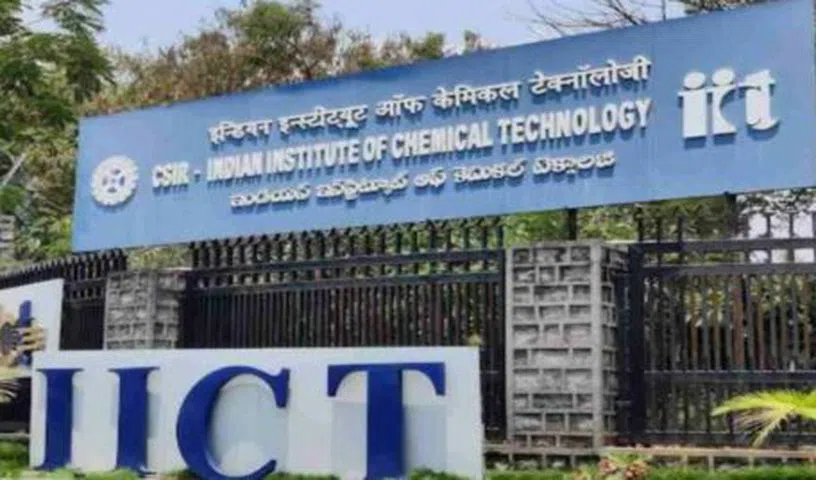
Researchers from **CSIR-Indian Institute of Chemical Technology (IICT) in Hyderabad and **CSIR-National Chemical Laboratory (NCL) in Pune are leading efforts to develop indigenous DME technology that can reduce India’s reliance on imported cooking gas.
Dr Raghunath Mashelkar Calls for Shift Beyond LPG
Former Director General of the Council of Scientific and Industrial Research (CSIR), Raghunath Mashelkar, urged the Union government to move beyond LPG and fully embrace DME technology.
Speaking on Thursday, Mashelkar said India’s heavy dependence on Middle Eastern fuel imports represents a strategic vulnerability, which indigenous scientific innovation can help overcome.
He highlighted the work done by CSIR-NCL in developing Dimethyl Ether, which is widely considered a near-perfect substitute for LPG.
Waste-to-Wealth Model Being Developed in Hyderabad
While several CSIR laboratories are working on producing DME from methanol, scientists at **CSIR-Indian Institute of Chemical Technology in Hyderabad are developing a more advanced “Waste-to-Wealth” model.
Researchers at IICT are producing DME directly from industrial carbon emissions using Carbon Capture and Utilisation (CCU) technology. This approach captures carbon dioxide released by industries and converts it into clean-burning fuel, reducing both emissions and fuel imports.
IICT Partners with BHEL for Pilot Project
In a significant step toward commercialising the technology, IICT has partnered with Bharat Heavy Electricals Limited (BHEL) through its R&D facility in Balanagar.
The two organisations have signed a Memorandum of Understanding (MoU) to establish a specialised pilot facility that will demonstrate how industrial carbon dioxide can be converted into DME fuel.
Unique Reactor Facility Commissioned
IICT is also the lead laboratory for the Department of Science and Technology (DST) for this project.
The institute recently commissioned a Fixed-cum-Fluidised Bed Reactor (FBR) facility — the first of its kind in India. The advanced reactor is designed to test the simultaneous production of high-purity hydrogen and Dimethyl Ether.
Potential Game-Changer for India’s Energy Security
Experts believe that if successfully scaled, DME technology could significantly reduce India’s dependence on imported LPG, strengthen energy security, and help lower industrial carbon emissions.
With the ongoing geopolitical tensions affecting global energy supply chains, indigenous solutions such as DME production through carbon capture technology may play a crucial role in shaping India’s future fuel strategy.