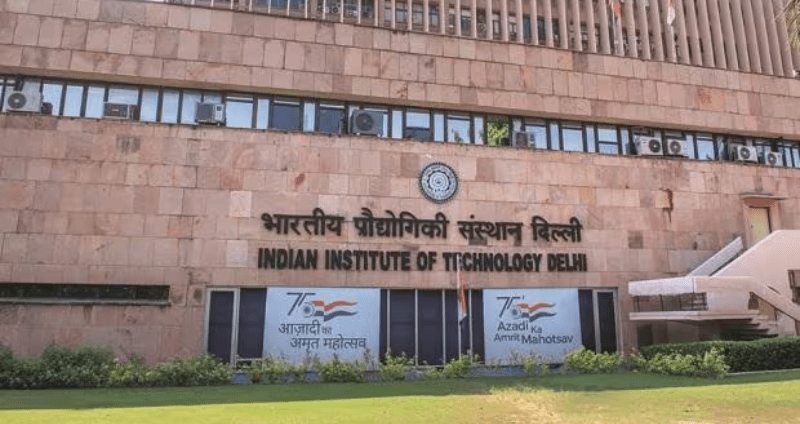
New Delhi: In a breakthrough aimed at addressing rising cooling demands, Indian Institute of Technology Delhi (IIT Delhi) is developing a next-generation smart air conditioner that consumes significantly less electricity than conventional AC systems.
The high-efficiency air conditioning system, currently under laboratory testing, is expected to reduce electricity consumption by nearly 33 percent while maintaining the same indoor comfort levels.
Rising Heat and Growing Power Demand
With temperatures steadily increasing across India, cooling has become essential for homes and offices. However, higher AC usage is pushing electricity demand upward.
According to the Ministry of Environment, Forest and Climate Change under the India Cooling Action Plan, electricity consumption for cooling is projected to triple by 2037–38, placing additional strain on natural resources and increasing power bills for consumers.
To tackle this challenge, IIT Delhi researchers are working on a sustainable and energy-efficient cooling solution.
How the New Smart AC Works
Traditional air conditioners operate using vapor-compression systems that overcool indoor air to remove humidity through condensation — a process that consumes high energy.
In contrast, IIT Delhi’s new system uses a salt-based desiccant solution to directly absorb moisture from the air. A specially designed thin membrane separates the salt solution from room air, ensuring that salt particles do not mix with indoor air.
When the solution absorbs moisture and becomes diluted, it needs regeneration. Instead of using additional energy, the system cleverly utilizes waste heat from the AC’s external unit to dry and restore the solution for reuse.
This hybrid mechanism significantly reduces energy consumption while maintaining optimal cooling performance.
Research Leadership and Innovation
The project is being led by Prof. Anurag Goel from the Mechanical Engineering Department at IIT Delhi, along with PhD researcher Anantakrishnan.
The research team has developed a compact add-on module that balances energy transfer between the conventional vapor-compression unit and the desiccant module under varying Indian climatic conditions.
Power Consumption Comparison
-
Conventional AC: ~1,200 watts
-
Hybrid high-efficiency system: ~800 watts
-
Energy savings: Approx. 33%
Prof. Goel stated that the system achieves similar indoor comfort standards while significantly lowering electricity consumption.
Published Research and Future Impact
The high-efficiency cooling technology has been published in the Journal of Building Engineering, highlighting its scientific credibility and potential for large-scale application.
Researchers believe this sustainable cooling innovation could be widely adopted in Indian buildings, helping reduce energy demand, lower electricity bills, and minimize environmental impact.
If successfully commercialized, IIT Delhi’s smart air conditioner could play a vital role in India’s transition toward energy-efficient and climate-resilient infrastructure.