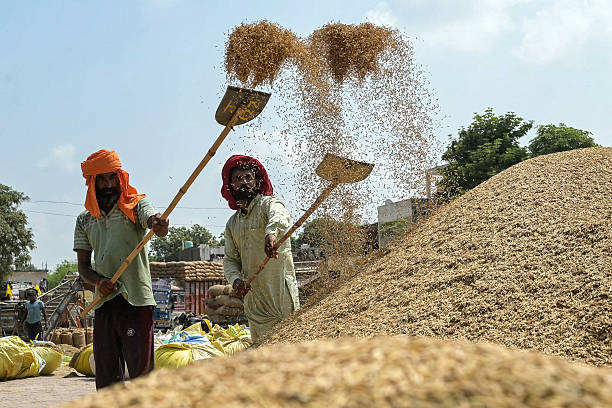
The Government of India has approved a revision in commission rates for agents, arhatiyas, and cooperative societies involved in the procurement of wheat and paddy on behalf of the government. The revised rates will come into effect from the Rabi Marketing Season (RMS) 2026-27.
The move aims to streamline procurement operations and support intermediaries engaged in aggregation and facilitation services.
Commission Paid for Procurement Services
As per existing guidelines, commissions are provided to:
-
Cooperative societies
-
Agencies and sub-agents
-
Arhatiyas (commission agents)
These entities play a crucial role in procurement by assisting in aggregation, handling, and facilitating the purchase of wheat and paddy for government stocks.
Decision Based on Committee Recommendations
The Ministry of Consumer Affairs, Food and Public Distribution announced that the revision follows requests from various state governments.
A sub-committee comprising representatives from:
-
Food Corporation of India (FCI)
-
State governments
-
Department of Food and Public Distribution
was formed to review existing commission rates. Based on its recommendations, the government approved an increase in commission rates.
Revised Commission Rates for Wheat and Paddy
For Arhatiyas (Commission Agents):
-
Punjab & Haryana (Wheat): Increased from ₹46.00 to ₹50.75 per quintal
-
Rajasthan (Wheat): Increased from ₹41.40 to ₹45.67 per quintal
-
Paddy: Increased from ₹45.88 to ₹50.61 per quintal
For Cooperative Societies:
-
Wheat: Increased from ₹27.00 to ₹29.79 per quintal
-
Paddy: Increased from ₹32.00 to ₹35.30 per quintal
Commission for Modern Silos
For procurement carried out in modern silos, the commission will continue to be 50 percent of the rates applicable in mandis, as per the existing policy.
Aim: Improve Procurement Efficiency
The revision in commission rates is aimed at ensuring the continued efficiency of procurement operations and supporting agencies involved in facilitating government procurement.
The decision is expected to strengthen the procurement system and ensure smoother operations during the upcoming marketing season.