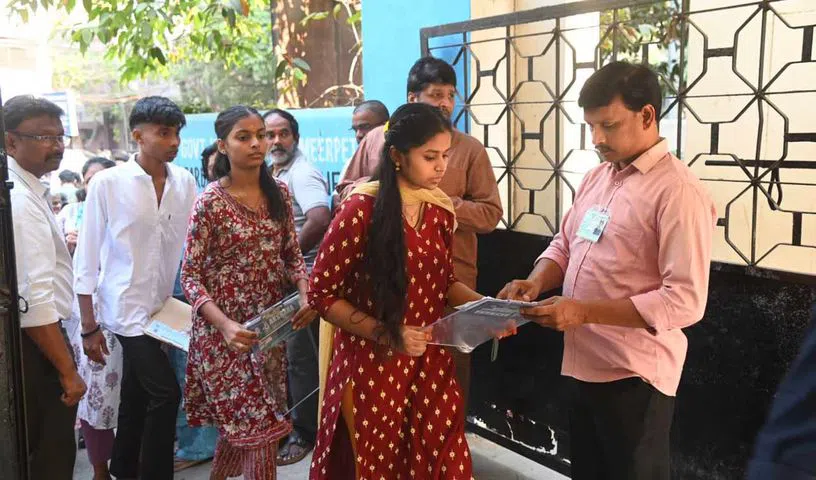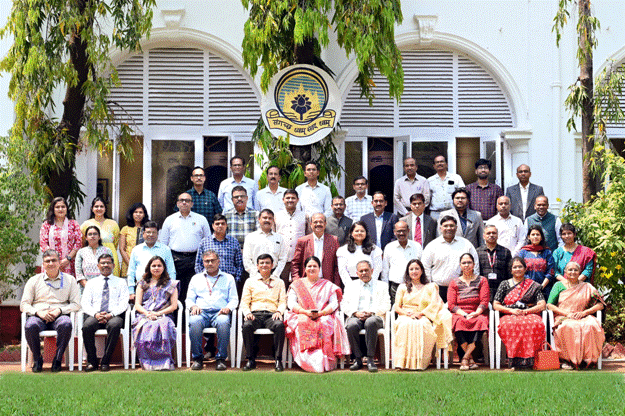
The Capacity Building Commission (CBC) organised a Southern Regional Consultation Workshop on March 13, 2026, at the Administrative Staff College of India in Hyderabad.
The workshop focused on collaborative capacity development and resource sharing among civil service training institutions. A total of 47 participants from 23 Civil Service Training Institutions (CSTIs) across southern India took part in discussions.
Focus on Institutional Mechanisms for Collaboration
The consultation workshop was organised under the leadership of S. Radha Chauhan and began with a welcome address by Chandralekha Mukherjee.
Mukherjee noted that collaboration among training institutions has often depended on informal and non-institutional factors, rather than structured mechanisms.
She called for a shift from supply-driven training models to demand-based capacity development, where institutions work together to address evolving governance needs by leveraging shared expertise.
Emphasis on Innovation in Public Administration
The Director General of ASCI, Nimmagadda Ramesh Kumar, highlighted the importance of lifelong learning for public servants.
He also referred to ASCI’s Centre for Innovation in Public Policy as an example of how institutions can encourage innovation and continuous improvement in public administration.
Three Pillars of Institutional Collaboration
The main session was moderated by Kamal Kapoor, who also chairs the thematic task force.
Kapoor outlined the outcomes of several weeks of consultations and highlighted the need to eliminate duplication of training materials across institutions.
He identified three key pillars of structured collaboration:
-
Faculty sharing
-
Content and knowledge sharing
-
Infrastructure sharing
Group Discussions Produce Key Recommendations
Participants later joined three thematic group discussions, where they explored existing challenges, proposed practical mechanisms for collaboration, and recommended institutional frameworks for future cooperation.
Some of the key proposals included:
-
Creation of a centralised faculty and resource directory
-
Integration of training calendars and content discovery systems
-
Development of a digital infrastructure dashboard linked with NSCSTI accreditation and credit mechanisms
Towards a Future-Ready Civil Service Training System
The workshop concluded with discussions on integrating the outcomes of the group sessions into a roadmap for future action.
In her closing remarks, Chandralekha Mukherjee emphasised the importance of transforming regional insights into concrete recommendations for building a collaborative, integrated, and future-ready civil service training ecosystem in India.